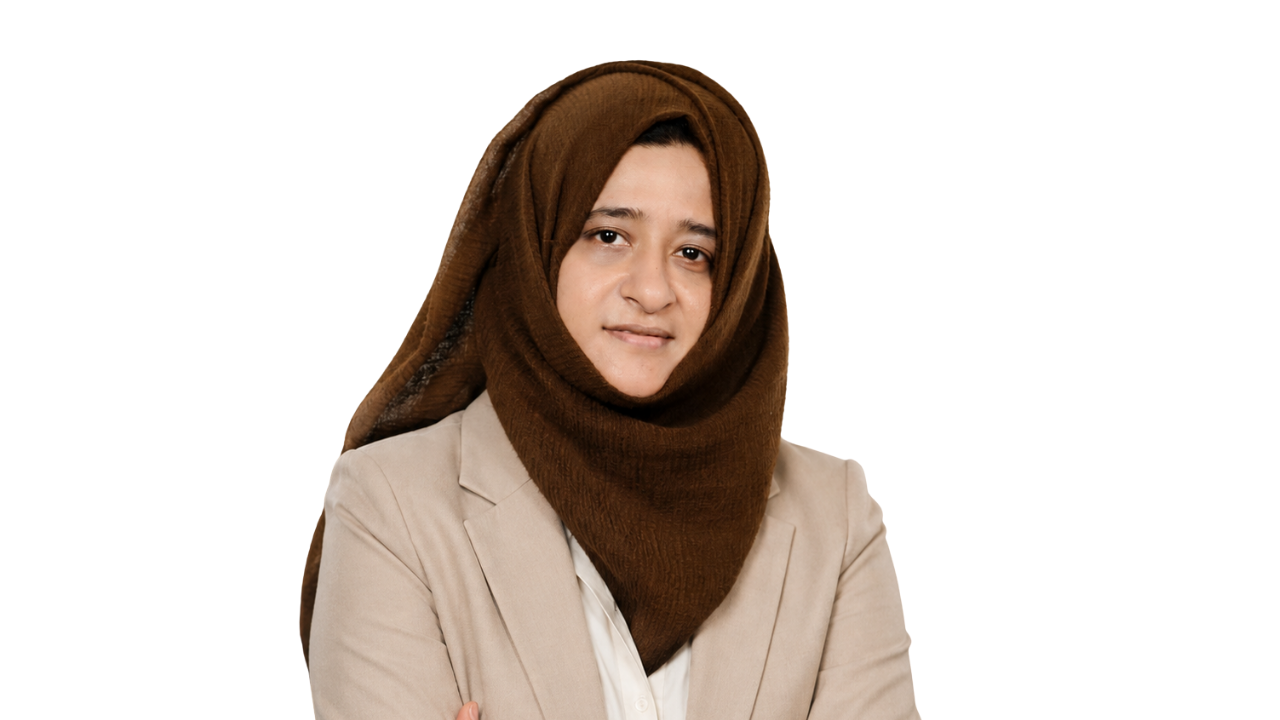
A writer’s identity cannot be measured simply by the number of books they have published. It is shaped by the subjects they choose, the way they perceive their time, their sense of responsibility towards people and society, and, above all, their willingness to question. In contemporary Bengali literature, Sonia Tasnim has emerged as a writer whose creative journey increasingly intersects with research, historical consciousness, and an engagement with some of the most complex questions of the contemporary world.
Tasnim has never confined herself to a single literary form or conventional genre. Fiction, short stories, travel writing, essays, and political and geopolitical analysis—all find a place within her diverse body of work. For her, literature is not simply an exercise in storytelling. It is a way of experiencing an era, recognising the crises embedded within it, and placing new questions before the reader.
This intellectual and creative sensibility is reflected in her published books. Z-Venom, Bikshon, Kenya Bhoyongkor, Oshomapto, Fourth Floor, Agontuk, Mayer Goynar Baksho, Bistirno Jolchhobi, and Keraler Gohine reveal a striking diversity of subject and form. Her works move between travel and history, heritage and human psychology, science and the complexities of human relationships. Her books therefore do more than draw readers into their narratives; they invite them into a wider space of reflection.
Her forthcoming political and social novel, Biprotip, represents another significant stage in this literary journey. Scheduled for publication by Obosor Publications at the upcoming Ekushey Book Fair, the novel explores contemporary social and political realities, their conflicts and contradictions, and the place of the individual within them. In many ways, Biprotip continues her growing engagement with the realities of the present, bringing them into the imaginative space of fiction.
Literature, however, is only one dimension of Sonia Tasnim’s intellectual engagement. She has also been active for years as a writer and commentator in the country’s print media. Her essays and columns have appeared in leading Bangladeshi newspapers, including Prothom Alo, Khaborer Kagoj, Alokito Bangladesh, and Silkroad, the special publication of Bonik Barta. Her writings have also appeared beyond Bangladesh, in West Bengal publications such as Puber Kolom, Azadi, and Janakantha, as well as in the Paris-based The Paris Mail and Paris Times.
The range of subjects she addresses is equally broad. From literature and history to international politics and geopolitics, her writings demonstrate an interest in understanding the forces shaping both society and the wider world. This breadth has gradually established her not only as a fiction writer, but also as a reflective essayist and public intellectual.
Research constitutes another important strand of her intellectual journey. She is currently associated with the Amii Nazrul Nazrul Studies and Research Centre, where she is engaged in research on Kazi Nazrul Islam’s humanistic philosophy, his ideas of equality and secularism, and his vision of human emancipation. Her approach seeks to examine Nazrul not merely as a literary figure, but also within the larger historical and socio-economic realities of colonial Bengal and the enduring human quest for freedom and dignity.
Her interests extend beyond literary research. She has also written and conducted research on the Liberation War of Bangladesh, the Indo-Pacific region, international politics, and the shifting balance of power among the world’s major actors. As a result, the scope of her intellectual engagement stretches from the intimate world of individual experience to the larger and often turbulent realities of society, state, and global politics.
Her contributions to literature and research have received recognition on a number of occasions. She has been honoured with several national and international awards, including the Chatak Honour from India, Sahitya Diganta Writer Award, Bangalir Kantha Award, Dhaka Sahitya Parishad Award, and the Udar Akash India-Bangladesh Friendship Festival Honour. More recently, she has been nominated for the Promila Nazrul Award.
Yet awards and recognition appear to be secondary to what she regards as the deeper responsibility of writing. Reflecting on her literary philosophy, she says:
“Literature, to me, is not merely the art of words; it is a moral responsibility to document the times.”
That single sentence offers perhaps the clearest insight into the foundation of her literary practice. She is interested not merely in witnessing the events of an era, but in looking beneath them—to understand their meanings, explore the relationship between history and the present, and bring the questions of human life and society into literary expression.
It is this impulse that continues to shape Sonia Tasnim’s journey as a writer and researcher.
In an age increasingly dominated by technology, accelerated communication, and shrinking attention spans, perhaps the greatest challenge before a writer is not simply to capture a reader’s attention, but to make the reader pause and think. Within Tasnim’s body of work, that invitation to reflection is becoming increasingly prominent.
By attempting to build a bridge between literature, research, history, and contemporary reality, Sonia Tasnim is gradually carving out a literary voice of her own. Her journey remains a work in progress—one that moves between the intimate and the political, the historical and the contemporary, the personal and the universal.
And perhaps that is where the true significance of her literary pursuit lies: in searching for the traces of time within words, and for the human story within the turbulence of an age.