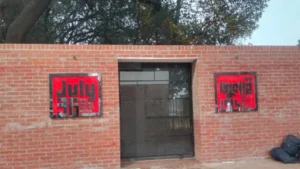
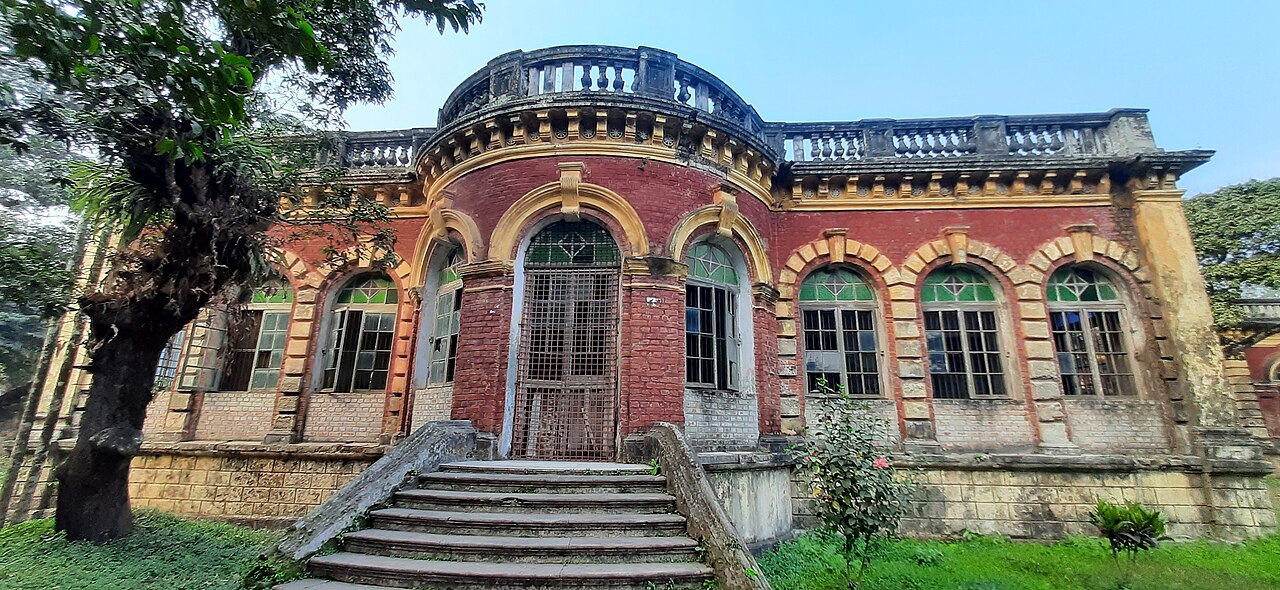
Right beside the Brahmaputra River, at the heart of Mymensingh town, stands a house that seems to have stopped time. Its name is Shashi Lodge. From a distance, it looks like a palace that slipped out of some European city and landed on Bengali soil. Get closer, and you realize it’s not just a building. It’s the story of a zamindar family, a living record of taste and craftsmanship from another era.
How the Story Began
Maharaja Suryakanta Acharya Chowdhury, the zamindar of Muktagacha, had no children of his own. He adopted a son, Shashikanta Acharya Chowdhury, and built this lavish palace in Mymensingh town in his name. That’s how it came to be called Shashi Lodge. Locals still pass around a story that a tunnel once connected the Muktagacha zamindar house all the way to Shashi Lodge. Whether it’s true or just legend, no one has ever confirmed it, but the story adds a layer of mystery to the place.
The original structure was a two storey building. Fine materials were brought in from Paris and other parts of Europe. Marble floors, chandeliers on the ceiling, stained glass windows. Inside, there was a fountain and a ballroom. Picture what evenings must have looked like in a house like that, over a century ago. Then in June 1897, a devastating earthquake struck and tore the palace apart.
Rising Again From the Rubble
Maharaja Shashikanta didn’t give up after the earthquake. Between 1905 and 1911, he rebuilt it. Spread across roughly nine acres, the palace welcomes visitors through a gateway with a semicircular arch. Inside, marble fountains and sculptures sit amid green lawns, easy on the eyes even now. On the southern side lies an old pond, and the bathing area built on its bank still hints at the luxurious lifestyle of that time.
When the Palace Became a Museum
In 1989, Bangladesh’s Department of Archaeology declared Shashi Lodge a protected heritage site. Since then, the palace has stopped being a zamindar’s residence and become the Mymensingh Museum.
Walk inside, and you’ll find countless rare artifacts from the zamindari era. Pieces gathered from the zamindar houses of Muktagacha, Gouripur, and Attharobari, as well as from Kenduya in Netrokona and Kaliakoir in Gazipur, sit lined up in rows. Ornamental bricks, enamelled bricks, terracotta fragments, and idols of Vishnu, Marichi, and Mahashridhar. Standing in front of them, it genuinely feels like time has paused.
There’s also wooden sofas, round tables, and beds from the 18th and 19th centuries, along with hookahs and pipes. Pen holders and inkwells sit alongside old swords, spears, and daggers. Tiger heads, deer and buffalo antlers point to hunting as one of the era’s favorite pastimes. A spinning wheel, a hand operated cutting tool, even sea shells have found a place in this collection. In one corner sits a rusted old chest, carrying the touch of the 1800s and 1900s.
The piece that stays with you longest is a sculpture by martyred artist Abdur Rashid. A tender scene of a mother and son, made in 1960. The walls also carry paintings collected from various countries. Outside the museum, framed photographs and short descriptions of Mymensingh’s notable landmarks line the walls, stirring even more curiosity about the district’s history.
When to Go, How to Get There
During summer, from April 1 to September 30, the museum stays open Tuesday through Saturday, 10 am to 6 pm, with a short break from 1 to 2 pm. On Fridays, it opens later, at 2 pm, and closes at 6 pm. The museum stays closed all day Sunday and for half the day on Monday. It’s usually closed on other government holidays too, though it sometimes opens on special government orders.
From Dhaka, buses like Shokhin or United run regularly to Mymensingh town. Get off at Maskanda bus stand and take a rickshaw to Shashi Lodge. Trains run regularly on the Dhaka-Mymensingh route as well, if you’d rather go that way.
Once you’re done exploring Shashi Lodge, it’s a short walk to Alexander Castle, Zainul Park, and the Zainul Collection. Seeing Shilpacharya Zainul Abedin’s paintings and personal belongings there rounds off the day nicely.
The grandeur of the zamindari era, a story of rising again after an earthquake, and now a museum holding thousands of artifacts. Put it all together, and Shashi Lodge isn’t just a place to visit, it’s a chapter of Bengal’s history. Worth a day trip if you can spare one.